Just a Little Spanking for You, Mommy, Should You Choose to Accept it

For kinder, gentler parenting advice and admonitions, go directly to the end of this post and read about Sally Clarkson’s book, The Mission of Motherhood.
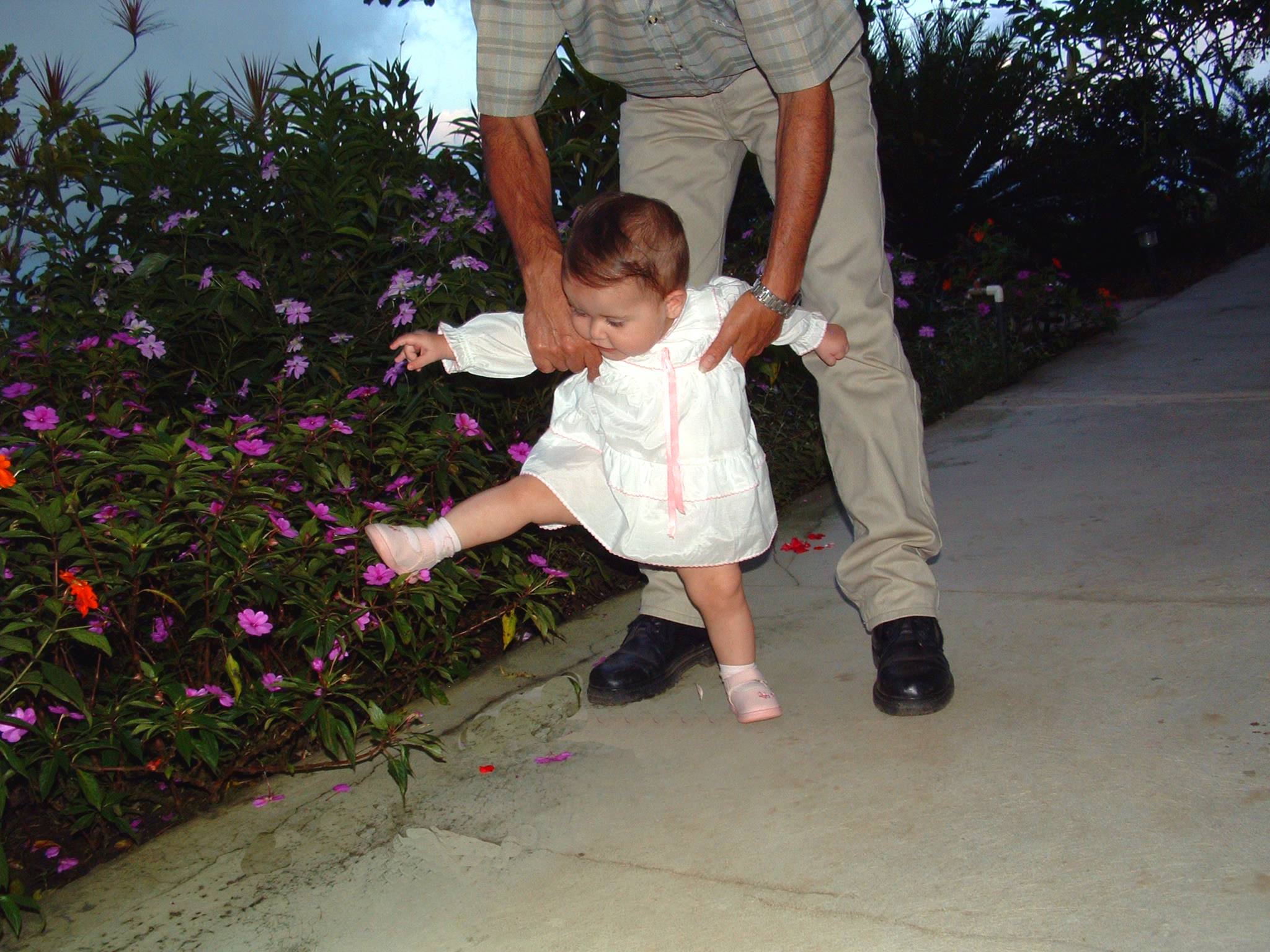
file000571999991

Counting to three.  Counting to three loudly.  Counting to three with threats (or rather, promises about to be broken). Is there anything sadder, sillier, more tiresome, or less effectual than a counting mommy?  I think not.

I ask myself, “Why?”  I ponder the questions, “Why can’t they see it doesn’t work?” and “Who is responsible for this parental drivel?”

Hell.  Hell holds the reason, the source, the blindness, and the responsibility.  Worst of all, the outcome is Hell–the Hell on earth of frustrated and angry parents living with bratty kids, and frustrated and angry kids living with witless parenting.

And books from Hell, written I surmise by:  men, or women who have nannies, or perhaps women who have never had a child, and yet, unbelievably, think they have the tiniest clue what they’re talking about.

What are the clues for me, the reader, that such authors have no clue?  A listing of some of the most glaring offenders begins with “The Fairness Doctrine,” reminding me that yes, there is something more tiresome than counting.  It’s grown-ups (well, in age at least) whining, “It’s not fair,” and teaching their children that fairness is their birthright, that everything and everyone should bend over backward to make sure they get their “fair” share.

Perversely, Fairness advocates, having taught their children greed, and disrespect, will insist they share and even give away favorite treasures to the neighbor’s even greedier get, or a whiny sibling. The child with the strongest will and weakest mother will win (and lose) in such encounters.

Fairness Doctrine devotees are also often proponents of “reasoning” with their little geniuses, and vehemently opposed to spanking.  I can hear it now, echoed by more than one lily-livered mommy, “Spanking is violence,” she says with pious horror and superiority.  “We don’t hit,” she adds in that valley girl affectation which makes real women squirm.  And yet, these children are often violent–screaming at and hitting their parents and siblings, without the slightest beginnings of the self-discipline necessary for life.  I submit to you where there is no natural order (that would be parents, rather than children, in charge) the most tyrannical and least qualified will rule.  Yes, there are households where two-year-olds reign.  Could anything be more ridiculous?

Yes.  We progress!  There is yet a further level of ridiculousness in today’s anti-logic parenting mantras.  They don’t spank, but they whine, wheedle, gripe, groan, endlessly and mindlessly repeat themselves, raise their voices, scream, and even cry.  “You made Mommy cry,” she blubbers.  PA-THET-IC!  Very probably she isn’t smart enough to spank.  Indeed, if she thinks spanking is violence, if that is what it is when she does it, perhaps she’s at least right in this one thing–she should not spank.

“Boys will be boys,” she smirks.  And criminals will be criminals, Mommy Idiotica.  Anything, it seems, is preferable to training your son that the world wasn’t expressly created for his amusement and debasement.

 “Safety first!” she mimes to justify keeping her listless, pasty-faced children indoors just because it’s nippy outside, as though it is actually good parenting (or even doable) to protect kids from any and all possibility of physical harm, even as she parks them in front of the TV at every opportunity, paying little or no attention to the mind-numbing and soul-bending messages bombarding their malleable psyches.

“Oh, kids are tough,” she explains as though she actually believes this lie, and also believes she possesses the wisdom of the ages.  Kids are humans, and therefore complex and beautifully fragile and sensitive beings, affected for good or bad by every single moment of their lives, and even more so, by every thought, word and deed of their parents.

These are a few of my (non) favorite things, and I have the credentials to talk about them–I have successfully raised world-changing (as opposed to weak, whiny, selfish, indecisive, crowd-following, world-destroying) children, and I have loved (almost) every minute of it.

P.S.  Villages are nice addendums, perhaps, but they cannot make up for ignorant, lazy, and irresponsible parenting.  Effective parenting is very hard work, so just accept that and get on with it. Prepare yourself for the long, long, long haul of teaching, re-teaching, training, praying, searching, paying attention, reading that same book over and over and over, praying, reading the Words of Jesus, and did I mention praying?  You don’t get overs on this, so live in the now–you have NOTHING more important to do than getting to know your child’s heart. Know that this parent/child training is ongoing and rigorous, and will stretch and grow you like nothing else on earth. Know also that the rewards are beyond compare and comprehension.  They are, as my daughter Hannah used to finish each night as we said her prayers, “peace and love and joy!”

P.P.S.  Should I write a book, entitled perhaps, “No One Loves a Brat, Be She Mother or Child”???  Speaking of books, the very best book on parenting I’ve ever read was by a woman raising world-changing children:  Sally Clarkson, bringer of great light via her masterpiece, The Mission of Motherhood

Home Comforts

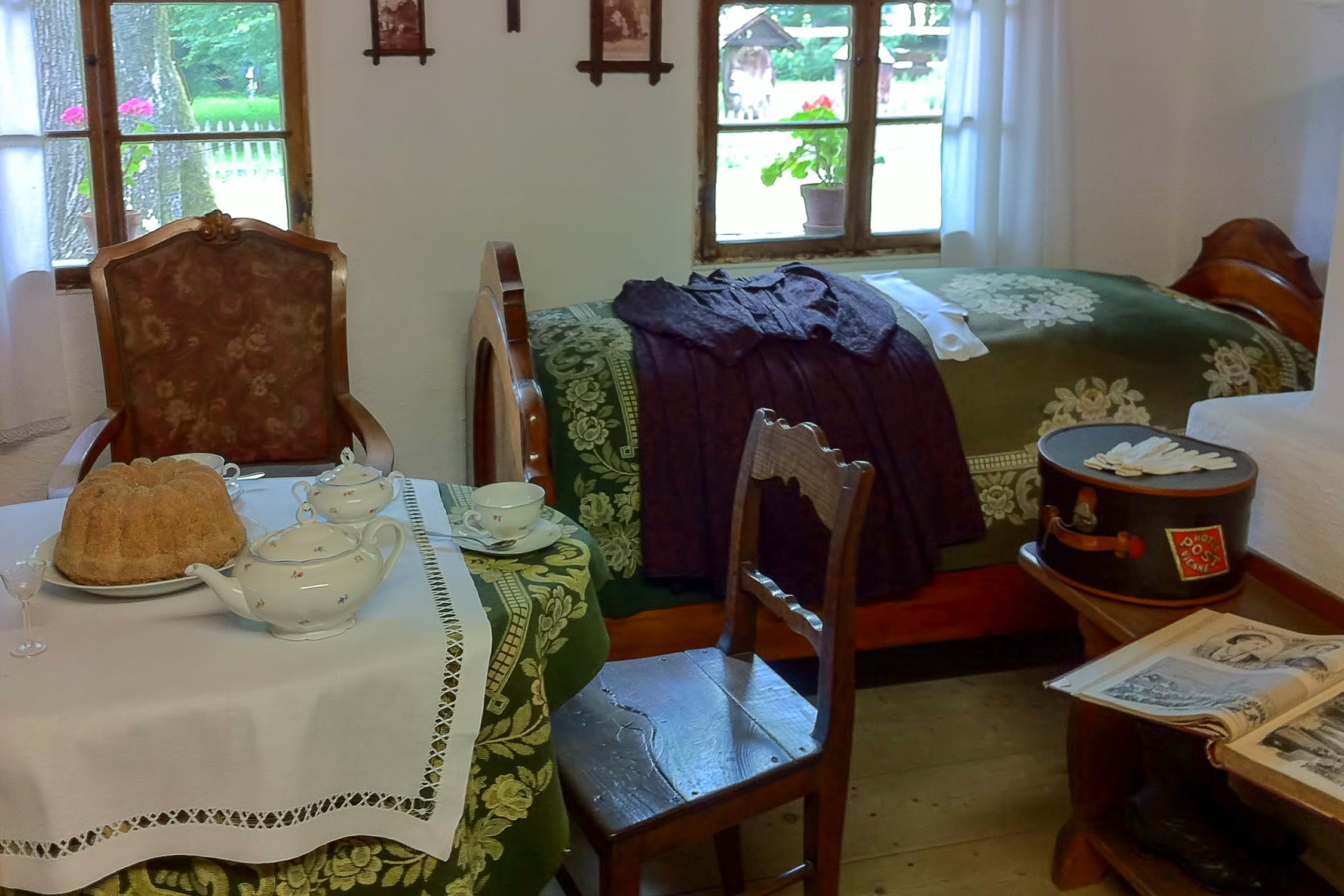
Room in a historical Bohemian village

Whether or not you homeschool, your children are watching and learning your attitude about homemaking.  If you’re like most moms, things get a bit messy at times, especially in our minds!  We need a bit of decluttering, a little refurbishing, direction, and refreshment.  I give you the beyond-anything book, Home Comforts.

Home Comforts, by Cheryl Mendelson, is one of my two favorite books on making home a haven (the other is Alexandra Stoddard’s Creating a Beautiful Home). Cheryl (she is a friend even though we’ve never met) has done her homework. A former attorney, she’s very diligent and disciplined, and has the intelligence required to make a good job of homemaking.

As this book is over 800 pages long, and covers anything and everything you can think of, I can’t begin to do it justice here. But as an example here’s a quote from the chapter on home cooking: “Good meals at home satisfy emotional hunger as real as hunger in the belly, and nothing else does so in the same way.”

Cheryl goes on to discuss how and why not to use cookbooks–I am vindicated! I believe a recipe is only someone else’s creation, certainly nothing written in stone. Of course, if Julia Child wrote it I will pay attention. But someone telling me to make pumpkin cake without salt, or that you don’t need all those walnuts in your oatmeal raisin cookies? I don’t think so.

As usual, I am loving the sound of my own horn tooting, and it’s time to get back to the marvelous book at hand. Home Comforts covers anything and everything you might ever want to know about homemaking.  You will be sorry when you’ve turned the last page, and if you’re like me, determined to read it again.

And to share it with others, especially family.

Do you want to excel at the high and highly rewarding calling of homemaking?  This book, so aptly named, will inspire and gladden your heart, and perhaps best of all, it will convince you that what you do at home truly matters.

It’s “Raising Mannerly Children,” Not, “Ignoring Aggravating Miniature Terrorists”

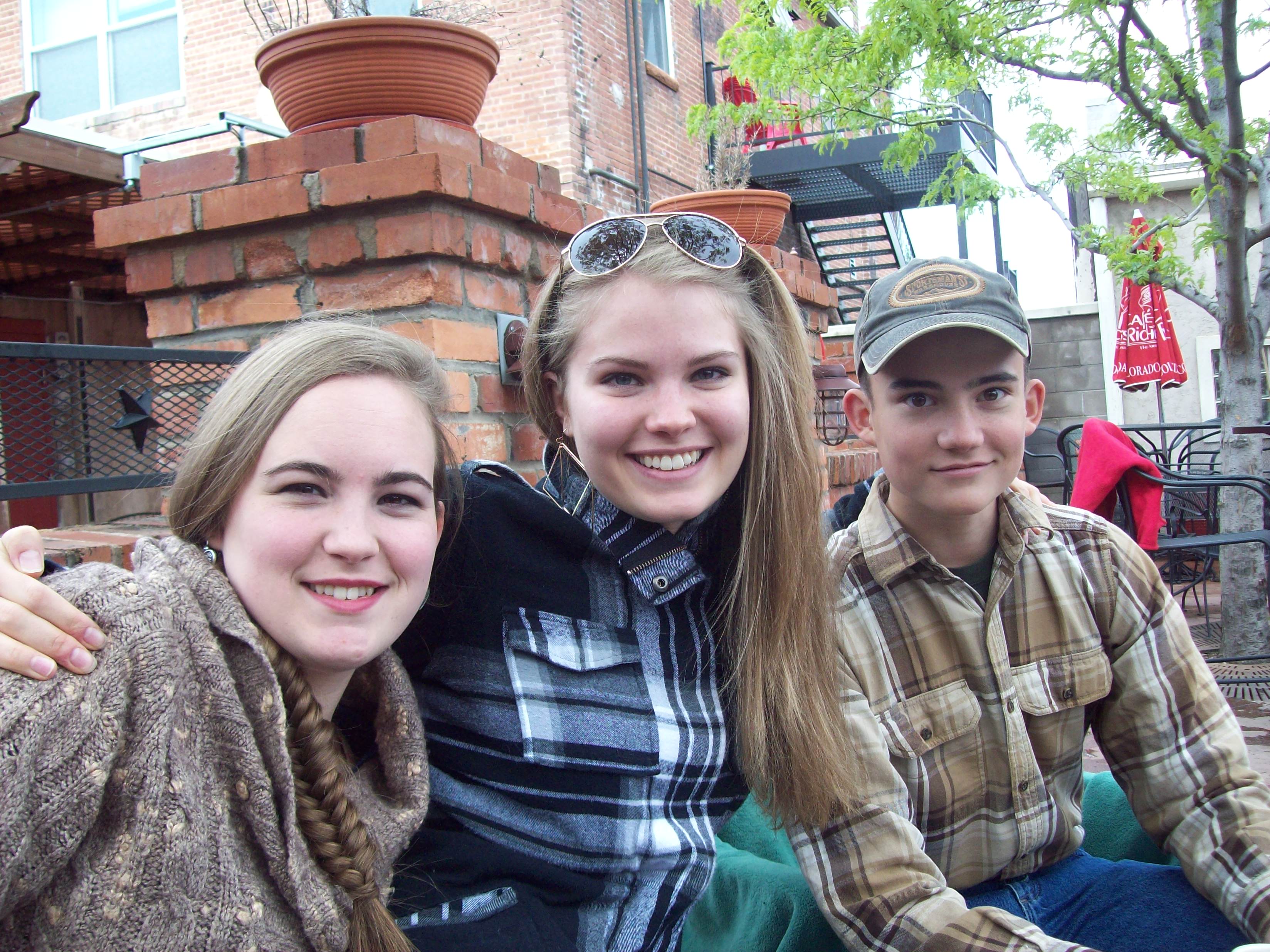
Note:   This picture was taken Mother’s Day, 2015, but I am pairing it with an article written in 2010, as I consider it worth repeating.

100_6406

The Importance of RAISING MANNERLY CHILDREN cannot be overemphasized. Manners are, in essence, simply the thoughtful consideration of the needs and wants of others.

The Golden Rule is so named because if you learn it, all else of value follows.

And if you don’t . . .

A life of misery–for you, your child, your child’s spouse and children and coworkers, neighbors–is what’s in store if you don’t teach your children manners.

Or, let’s look at it another way: Teach your children to think of others and they will naturally have manners.

This is an ongoing task (see the article’s end for how to begin with ease and quick results), but the rewards are commensurate with the effort.

Seth, (a 10-year-old), has an excess of energy, and sometimes tears through the house like a dervish. Recently he raced past the girls and me, who were having a pleasant conversation, yelling and brushing against us.

It was time for conscious parenting. Time to heed that little voice in my head that said, “Stop what you’re doing, stop having a nice chat with your girls, and deal with this.” So I stopped.

IT’S MY JOB.

Not fun, but necessary. I will not be the mother of a hellion, who thinks the conversations and happiness of others beneath his time and consideration.

Yes, we all know someone like this. An adult. Not a pretty picture.

Remember: If you don’t care enough to teach your child to be kind and considerate, who will?

But how?  Where to begin?  An excellent place to start is with Munro Leaf’s books, those loved and still remembered by my kids–Manners Can Be Fun, How to Behave and Why, and How to Speak Politely and Why.

Fun, funny, great illustrations, and effective:  Munro Leaf.

Done! by Don Aslett


file0001631089542

Done! by Don Aslett is excellent.  Usually, with non-fiction I scan the table of contents for something worthwhile, take much of even the choicest subjects, then scan and glean.  Gleaning is the art of checking the author’s views against real wisdom (God’s opinion) and against personal experience, and seeing if there is anything worthwhile leftover.

In Done! I have found a treasure, start to finish–no need for gleaning.  Rather, there is a need to buy the book (giving my current overdue copy back to the library), read it again, and make it required reading for my kids, beginning with Chapter 8–The Magic of Early.

Don Aslett turns a lot of conventional “wisdom” on its head in this book, speaking from a wealth of experience and success in all areas of his life.  Done! is fun, entertaining, easy to read, and inspiring.  What more could you ask?

Beautiful Outlaw – A Book for all Reasons

100_5215

One of the many beauties of home education is the time to read, and to share great books.  When I bought John Eldredge’s Beautiful Outlaw for my son Benjamin, I wasn’t worried about his not reading it.  Even if he didn’t read it, someone at our house would.  This I knew from experience.

Not only did Benjamin read the book, and quote from it often, he urged me to read it.  I don’t think I’m unique in liking to pick my own books, and being somewhat resistant when people insist I read something.  But since Benjamin is not the insistent sort, and because I know John Eldredge can be trusted, I picked up the book.

I would breeze through it, job done.  Wrong.  I savored this book–reading a bit and smiling and stopping to consider.  As I neared the book’s end, I slowed down.  I didn’t want this journey with John Eldredge and Jesus to end.

What a privilege to, if you will, have a conversation with a free thinker.  A radically Christian radical.

When a book speaks to an 18-year-old young man as well as to his mother, there’s something going on.  When I love a book, yet can’t quite bring myself to part with it, there’s something going on.  And when a book changes and clarifies my thinking in a way that electrifies my joy in Christ, well, I just have to rave.

How About a REAL Romance!

IMG_3718

They’re the books my junior high principal used to entice non-reading boys, and they worked like nothing else.  They’re the books beginning with cliffhanger action, getting more exciting with each page, and ending satisfactorily every time (the boy and the girl have an understanding).  They’re Jubal Sackett, Sitka, Last of the Breed, and SackettThat’s right, they’re Louis L’Amour westerns (well, a few of his books, including Last of the Breed, aren’t westerns, but they’re still great books).

By “great” I mean, for starters, they have heroes worth remembering.  I remember, for instance, the Sacketts.  There are certain arroyos, canyons, and long vistas that take me back to a reading moment, and I say, “Look, I think Tell Sackett’s down there in that gulch.”  And there’s no doubt he’s about to do the right thing.  Not the easy thing, but the right thing.

So, no, these books aren’t Putlizer winners, they don’t have endorsements on the back telling us how “poignant” they are.  We won’t impress our “intellectual” acquaintances by stacking them about our living room.  And if we do try stacking them, they won’t remain stacked as do all the “right” books and the “must-reads”.  Rather, they will be read!

Every freeschooled bookwyrm has turn-on books.  Hannah, for instance, began her love affair with books by reading The Lion, the Witch, and the Wardrobe and The Secret GardenHer only Louis L’Amour book was The Last of the Breed.  Our other three bookwyrms have read, as have their parents, every Louis L’Amour (as far as we know) more than once.  Of course, bookwyms read almost all genres–anything and everything worthwhile, and some books not so worthwhile.

“Not so worthwhile” includes many recommended books, best sellers, and “must-reads” which are missing at least one of those main ingredients–worthy characters, an interesting plot, and a satisfactory ending.

Let’s stop worrying about what other people say we “should” read and let’s please ourselves with books that deliver.  Like say, a real romance.  Say, maybe, a Louis L’Amour.

Tea Cozy?

100_6267

You may think a tea cozy is a quilted teapot cover, and if so, may I recommend the knitted pineapple cozy found in Jane Brocket’s inimitable The Gentle Art of DomesticityBut I’d like to introduce the idea that a tea cozy is also a gathering of bliss wherein tea plays a part.
My first tea party was at friend’s house, and it was given in honor of our dolls, with a tiny painted metal tea set.  The dolls had tea (water) and raisins, and were quite happy with their fare.  After all, they got to sit at a little red wooden table in matching chairs, and be served. To this day, that is one of my all-time favorite teas cozies.
Such cozies may occur on quilts in the backyard with toddlers, peanut butter and crackers, a great book(s), and of course, tea.  Tea may be nice and hot in a thermos if fall is hinting at winter, or it may be iced to be enjoyed with berries picked alongside the road as you hike to a clearing under a nice big oak tree.

Other lovely tea cozy ideas include but are not limited to::  making breakfast special with tea, history teas, tea parties on a budget, literary teas, dress-up teas, teas on the balcony amid falling snow, slumber party teas, If-I-Could-Travel-Anywhere teas, Christmas teas, and tea parties for no particular reason (I think of these as conversation teas).

The only rule for a tea party is:  Conversation must be kind and intelligent.  Tea is a most excellent place to teach etiquette, and in fact when the kids were small I often brought a favorite etiquette book to our gatherings, Manners Matter by Hermine Hartley.

Now if you don’t have etiquette books, tea sets, knitted tea cozies, and a variety of gourmet teas, don’t be discouraged.  Have a coffee cozy (I use swiss water decaf mostly when having coffee with kids), or serve milk and cookies and call it a milk.  A milk?  Maybe a milk cozy.  If it’s cool outside, heat the milk and add honey and maybe some cinnamon and nutmeg.

There are endless possibilities, but the bottom line is simply this:  always be on the lookout for a tea cozy opportunity.  Bliss!

School in the Trees

file0001899299486

Remember field trips–the best part of school?  It didn’t matter where you went, just that you got to go outside!

Since the kids were small I have seized opportunities to go outside–school on a quilt in the back yard; school as we pulled the littlest child on the biggest quilt in the red wagon.  We didn’t call it school as we ate dusty blackberries picked from the roadside to enjoy as we read Timothy Tattercoat by Maryel Chaney.

But oh, the lessons learned. Years later we didn’t call it school when we climbed and scooted and grunted our way to the top of the tallest rocks in the mountains behind our house, and stood reaching for the sky and talking of dreams.

I certainly don’t call it school when I demonstrate the ultimate in relaxation.  Sometimes, no matter how enthralling the book I’ve chosen to read on my quilt atop an aspen leaf/pine needle carpet, I fall asleep in the sunrays shining through the trees.  Whiling away afternoons celebrating the short but glorious Rocky Mountain summer is a lesson in, well, does it always have to be a lesson?

There is nothing difficult about any of this “schooling” – watching butterlies and humming forgotten tunes, telling stories of my childhood, experiencing my children. Perhaps more than wondering what the lesson is for my children, I should consider the message:  Life is wonderful.

Permission to Nap

Permission to Nap:  Taking Time to Restore Your Spirit by Jill Murphy Long is the book to back up my thoughts about napping.

Taking a nap is one of life’s great luxuries. Like the first birds singing in spring breezes, and rivers rushing with snowmelt.  And like the way everything glows in the evenings after the rain, and the rainbows–double and even triple rainbows!  Those are right up there with falling stars across New Mexico skies at midnight, Oklahoma sunsets, the smell of sage in a Wyoming thunderstorm you can see coming for miles, and the sound of the wind in the Colorado pines.

Wildflowers, fat marmots, brilliant cardinals and croaking toads–these joys are available to us all.  And when you add a really good story to gently fall asleep to, say Snow in April by Rosamunde Pilcher, with sunshine bathing your face . . . . Let’s just call ourselves blessed.  And rest.

Hormones, Health and Happiness

happy-stick-girl

Hormones, Health and Happiness by Stephen F. Hotze, M.D. with Kelly Griffin is a real find.

It is written by a former establishment medical practitioner who followed his

wife’s advice to the kids – in a nutshell, “Don’t follow the crowd.”

Disillusioned with modern medicine, tired of not truly helping his

patients, he prayed with his wife for a solution. “My prayers,” he says,

“were answered as they so often were – in a form that was both an

opportunity and a challenge.”

The book’s beginning: “Are you sick and tired of being sick and

tired? Are you weary of doctors who won’t listen to you, don’t

understand you, and offer only prescription drugs as the solution to

your health problems?”

The ending? I’m not there yet, but I’m enjoying every single page of

this marvelous book – awesome for men, as well.