Just Say “Whoa!”

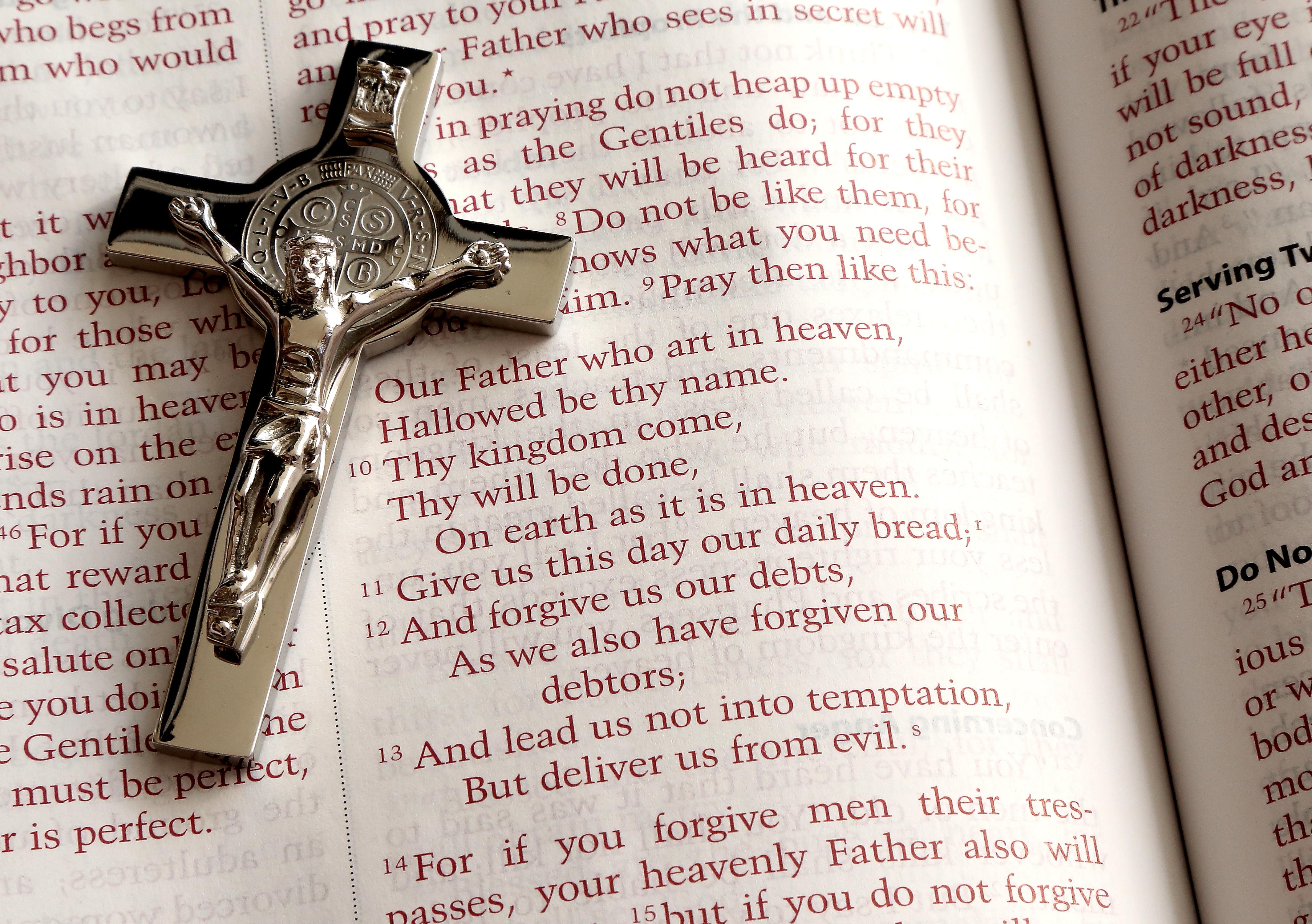
Our_Father 2_red

Upside down and backwards – that’s how you and I can turn the devil’s schemes, if we will evade the trap of judgment.

What is your burden, what is your lament?  That is also your clue to where you have power.  Take that thing that irks, bothers, grieves you most, and pray!!!

When you catch yourself (as I did recently) feeling utterly defeated and hopeless and just plain aggravated about something, and you hear yourself saying STUPID things such as, “That battle is too far gone, it’s hopeless, that problem is fully entrenched in our society (or in your marriage, family, child, friend) and will never go away,” JUST SAY “WHOA!”

The grief over that problem – in this case I was talking about the ravages and seemingly hopeless problem of drug addiction – is your latest unction to pray.  The Bible sets a very opposite picture of what we’re to be, from what we often are.  We are not called to be defeated, defensive, hopeless whiners and sideliners.

We are to be, and are promised that we are, way more than conquerors (Romans 8:37).  Matthew 10:8 says, “Heal the sick, cleanse the lepers, raise the dead, cast out devils: freely ye have received, freely give.”

Does that sound like a tall order?  I don’t look at it like that.  I just say, “OK, Lord.  I believe.  Show me how.”  I want to turn the devil’s tricks upside down and backwards.  I want him to wish he’d NEVER messed with me and mine.  I want to turn every lament, every whine and gripe fest into Victory in Jesus.  Amen.

,

Family First?

IMG_7192_p

Or last?

One of the many beauties of home education is that family comes first, naturally.  The fruits of that, provided grace is in place, are unlimited, and this was brought home to me recently when I read an article about eliminating negative people (especially those who hinder living in faith and love) from our lives.

I respect the author of this article, and gave serious thought to her words.  Was I not eliminating such people out of fear of conflict, or perhaps because I’m too nice?  Were they truly a hindrance?  There was no question that these people are difficult and tiring, but were they really a problem?  A spiritual roadblock?

No.  And here’s why:  My family keeps me strong, on track.  We pray with and for each other, and with and for others, every single day.  When I am brought down by someone or something and make my fall evident with frustration and negativity, someone in my family will do as I’ve asked them to do:  Don’t let me get away with it!

We learned from Pastor Keith Moore’s example to say, in response to negativity (anything contrary to scripture), “If you say so.”

Aaaargh!  It makes us wanna box someone’s ears (I’ve been reading too much Georgette Heyer, if there’s any such thing as too much Georgette Heyer ).  But, instead, we take deep breaths, roll our eyes, wrinkle our noses as though at a very unpleasant odor, and change our words.

Example:

Me: I’m sick to death of his crap and I’m gonna give him a piece of my mind.”

Brat Child of Mine with Snarky Grin:  “If you say so.”

Me:  Really deep breath, mutterings, stomps, yeah-buts, etc.  Another deep breath.  “I am taking his nonsense as an unconscious cry for help, and I’m not giving him a piece of my mind because obviously I can’t spare it, and I’m going to stop and pray for him right now.  Will you, dearest child, agree with me in prayer?”

I just strengthened myself, lightened the load of the child who has to listen to MY crap, and prayed myself right out of Satan’s way of thinking and doing, and changed things for the person I prayed for.  Rather than a piece of my mind, he got a piece of God’s love.  Amen!


Authenticity at Home

file000939251098

What is an authentic home?  In looking at the definition of authentic below (see the end of the post), we can deduce that, in a word, an authentic home is real.  Does your home feel authentic to you?  Are you comfortable in it, and does it offer comfort to others?

I am reminded of a purchase I made yesterday.  In a shabby chic sort of store, I searched for something to catch my eye, something to speak to my heart.  I wanted something that would slightly alter and enhance my home.

Mostly I saw things that wouldn’t stand alone.  They were attractive in their settings, but not something I really wanted at home (well, there was that framed picture that said, “Eat Cake for Breakfast” but I don’t care for art that tells me what to do). And then I saw it:  a red vintage umbrella.  The handle was wooden, it worked beautifully, it was red, and it was raining outside.  Yay! I had almost bought an umbrella a few weeks ago, but it was . . . well, let’s just say it was not Made in America (it broke when I opened it).  It was “cheaper” than the red umbrella in every way, and had I bought it, way more expensive.

I chose the authentic umbrella, just as I choose an authentic home.  Any time I can substitute wood for plastic, fresh for canned, a walk in the woods for floor exercises, my child singing in the shower for radio music, denim for polyester, shoe laces for Velcro, viewing the currently running Jan Brett art exhibit in Fort Collins vs. an intelligence-insulting matinee, lounging in a home-crocheted afghan on a second-hand leather couch rather than wrapping up in, and sitting on, new micro-fiber monstrosities, cotton diapers to replace paper/plastic sweat wrappers, homemade biscuits dripping with butter instead of Styrofoam with a stingy (thank God) bit of margarine . . .

You’re thinking this all sounds like too much work, and too time consuming?  What are you doing that’s more important, more satisfying, than authenticating your home, your life, your soul?

P1040359

Syllabification: au·then·tic

Pronunciation: /ôˈTHen(t)ik/

(abbreviation: auth.)

Definition of authentic in English:

adjective

1Of undisputed origin; genuine: the letter is now accepted as an authentic documentauthentic 14th-century furniture

More example sentences

  • He is in no doubt that the document is an authentic copy of the original.
  • In recent years, Disney’s park designers have filled the place with what look like real antiques, genuine artifacts, authentic junk.
  • A letter should have been sent to confirm that the references were genuine and authentic,’ he said.

Synonyms

1.1Made or done in the traditional or original way, or in a way that faithfully resembles an original: the restaurant serves authentic Italian mealsevery detail of the movie was totally authentic

More example sentences

  • These hotels and restaurants did all they could to recreate all that is authentic in traditional Kerala cuisine.
  • The restaurant ensures that Mangalorean cuisine is made and served in its traditional and authentic form.
  • The crowd then made their way back to the High Cross Inn where they celebrated St Patrick s Day with traditional music including authentic bag pipe playing.

1.2Based on facts; accurate or reliable: an authentic depiction of the situation

More example sentences

  • The written word persuasively conveys the authentic ring of reliable authority in a way the recollected spoken word does not.
  • It’s based upon an authentic story that happened in the ’20s and ’30s.
  • Earlier an unnamed assistant editor had emphasised ‘the need for publishing absolutely accurate and authentic information’.

Synonyms

1.3(In existentialist philosophy) relating to or denoting an emotionally appropriate, significant, purposive, and responsible mode of human life.

Example sentences

  • Hence, he argues that the appropriate mode for authentic human existence is the personal.
  • For Heidegger, authentic existence begins from self-understanding.
  • As such, for Heidegger, an authentic existence requires as its precondition a radical and not received experience of the past.

2 Music (Of a church mode) comprising the notes lying between the principal note or final and the note an octave higher. Compare with plagal.

Origin

Late Middle English: via Old French from late Latin authenticus, from Greek authentikos ‘principal, genuine’.

“NO!” to Corrupt Communication, “YES!” to Grace

file000868689848 “Let no corrupt communication proceed out of your mouth, but that which is good to the use of edifying, that it may minister grace unto the hearers.” – Paul, in Ephesians 4:29

Paul says you have the say so.  YOU “let” no corrupt communication proceed out of your mouth.  If you have to duct tape your lips together, you just say “No!” to corrupt words.  “Corrupt” in this instance is translated from the Greek word sapros, meaning:

  1. rotten, putrefied

  2. corrupted by one and no longer fit for use, worn out

  3. of poor quality, bad, unfit for use, worthless

So, what kind of words, then, do we use?  Words good for edifying and ministering grace.  Let’s begin with “edify”, which comes from the Greek word oikodome, meaning:

  1. (the act of) building, building up

  2. metaph. edifying, edification
    1. the act of one who promotes another’s growth in Christian wisdom, piety, happiness, holiness

  3. a building (i.e. the thing built, edifice)

Now, let’s look into ministering grace.  “Minister” is from the Greek word didomi, meaning:

  1. to give

  2. to give something to someone
    1. of one’s own accord to give one something, to his advantage
    2. to bestow a gift

  3. to grant, give to one asking, let have

  4. to supply, furnish, necessary things

  5. to give over, deliver
    1. to reach out, extend, present

    2. of a writing

    3. to give over to one’s care, entrust, commit
      1. something to be administered
      2. to give or commit to some one something to be religiously observed
  6. to give what is due or obligatory, to pay: wages or reward

  7. to furnish, endue

  8. to give
    1. to cause, profuse, give forth from one’s self
    2. to give, hand out lots
  9. to appoint to an office
  10. to cause to come forth, i.e. as the sea, death and Hell are said to give up the dead who have been engulfed or received by them
  11. to give one to someone as his own
    1. as an object of his saving care

    2. to give one to someone, to follow him as a leader and master

    3. to give one to someone to care for his interests

    4. to give one to someone to whom he already belonged, to return

  12. to grant or permit one
    1. to commission

And now for grace.  In the Bible, “grace” has different shades of meaning, from different roots, all of them marvelous, powerful, and wonderful.  In this verse, “grace” is derived from the Greek word charis, meaning:

  1. grace
    1. that which affords joy, pleasure, delight, sweetness, charm, loveliness: grace of speech

  2. good will, loving-kindness, favour
    1. of the merciful kindness by which God, exerting his holy influence upon souls, turns them to Christ, keeps, strengthens, increases them in Christian faith, knowledge, affection, and kindles them to the exercise of the Christian virtues

  3. what is due to grace
  4. the spiritual condition of one governed by the power of divine grace

  5. the token or proof of grace, benefit
    1. a gift of grace

    2. benefit, bounty

  6. thanks, (for benefits, services, favours), recompense, reward

And now, let’s put ourselves on the receiving end.  Do I want to be the recipient of corrupt words–putrid words, words unfit for use, rotten words, death words?  I think not.  I was not created for this.  In God’s very image, I am created for love, for grace, and to minister grace.

Our mates, children, friends, and associates have no need of any corrupt communication which may be trying to “proceed out of our mouths.”

Choose life and say so.

Marriage Makers vs. Marriage Breakers

OUT  WITH THE JUDGMENT, IN WITH THE JOY!

DSC_2020

“Take the word ‘should’ out of your vocabulary.  Don’t say ‘should’ unless you’re looking in the mirror.”  A wise woman once said these words to me, and I took them to heart.  Or tried to.  No easy feat, this.

I want to talk today about the dangers of “should” and those of “supposed to” as relating to marriage, or indeed, any relationship.  I will try to avoid a rant, especially when I begin discussing my least favorite of all “supposed to’s”–“The man is SUPPOSED TO be the spiritual head of the house.”  Oooh, I feel my blood pressure rising already, so let’s just back up and talk about “should” dangers.

We each and every one have full plates–plenty, plenty of things to work on in our own selves.  But, alas, when a lass begins focusing on all those shortcomings of her mate (friend, sibling, parent, co-worker) her eyesight is adversely affected.  She looks right over the running-over pile on her plate.  To put it another way, worrying yourself about someone else’s faults will make you blind to your own.  You will personify that person admonished in the Bible to get the giant plank out of their own eye instead of worrying about the speck in someone else’s (Matthew 7:3,4).  Sounds like looking at someone else’s little faults actually gives our own room to grow.

And if this is not bad enough, when we zero in on another’s faults, their eyes become wide open to our faults!  I don’t know about you, but I certainly don’t need that.

Should-ing people is, however, a fine and sure way to decrease your popularity, in case you are that rare person who prefers being unpopular, who likes to be thought of as an ill wind or a foul odor.  While I’m not overly concerned with popularity in general, I am quite concerned about being popular with my mate.  It just makes sense to me.

OK, here we go with a cousin to shouldsupposed to.  The statement, “The man is supposed to be the spiritual head of the household,” has caused misunderstanding, anger, and disappointment  in more than one relationship.  What in fact, does that mean, anyway?  It depends on who you ask.  These words, tossed about from preacher to congregation, from husband to wife and from wife to husband, mean something slightly, or radically, different to everyone.  Often, however, they aren’t owned words–words taken in by the man and developed by God.  Rather, they are thrown words–words accusing of shortcoming, of failure.

Wife and husband rarely see that statement in the same light, but neither do they communicate about their respective perceptions.  So, as they become frustrated with each other, and as the children see their dad failing at this obviously all-important mandate, the water of family life circles the drain.

Like “should,” “supposed to” is a  boomerang.  When you tell someone else what they should do (unless of course, they ask for, respect, and desire your opinion, which they rightly trust will be delivered in love) you become blind to your own duties of love and responsibility, and you focus the eyes of your accused on your own shortcomings.

These behaviors put you in a place of chaos, a place where you step out of touch with God’s voice and plan for yourself, even as you interfere with what He may be trying to say to your victim.  That’s right, I said VICTIM.

The bottom line is you are judging, and as promised, you will be judged, you will have a sad and sorry outcome.  Just as a wise woman once said, “Take ‘should’ out of your vocabulary.”  And as another wise (at least in this instance) woman adds, “Take ‘supposed to’ out at the same time.

Fathers, (and Mothers) Provoke Not Your Children to Wrath

scream-cartoon-painting

My motives are pure:  I love children.  They are of exceedingly great value in my eyes.  Therefore, when I see them, as in the grocery store not long ago, screaming at and hitting their mothers, I am more than grieved, shocked, and appalled.  I am mystified.  Or was.

I drove home sick at my stomach.  “I don’t understand, Lord,” I prayed.  “Why would a mother put up with this?  How does this happen?”

And insight came:  She hasn’t done the nurturing, she knows deep inside she has no right to admonish.  Ah yes, Ephesians 6:4, KJV–And, ye fathers, provoke not your children to wrath: but bring them up in the nurture and admonition of the Lord.

That child was provoked to wrath, in this case I surmise by the mother as well as the father, because of the absence of balance.

I, for one, have always preferred nurturing to admonition.  John (my husband) told me long ago, that if I had to err, my children would be better off with a little less nurturing and a little more admonition.  My response was that I don’t have to err, not if my nurture and admonition are directed by the very Spirit of God Himself, and that I will nurture my children until their cups runneth over, thank you very much.

I secretly thought I would just leave most of the admonishing to him, and I know I have plenty of sisters who think this way.  Not good.

My daughter is acquainted with a young woman who said she wished her mom had married someone else.  This is a family where the mom never disciplined, so the dad had to be the bad guy.  Not fair, not healthy.

We must all be brave enough to examine our parenting in the light of scripture, and let our child’s behavior be the indicator of where we might be missing it, be it nurture, admonition, or simply complete disregard for the author and finisher of good parenting–that would be our child’s Creator.

heartRipples

Just a Little Spanking for You, Mommy, Should You Choose to Accept it

For kinder, gentler parenting advice and admonitions, go directly to the end of this post and read about Sally Clarkson’s book, The Mission of Motherhood.
file000571999991

Counting to three.  Counting to three loudly.  Counting to three with threats (or rather, promises about to be broken). Is there anything sadder, sillier, more tiresome, or less effectual than a counting mommy?  I think not.

I ask myself, “Why?”  I ponder the questions, “Why can’t they see it doesn’t work?” and “Who is responsible for this parental drivel?”

Hell.  Hell holds the reason, the source, the blindness, and the responsibility.  Worst of all, the outcome is Hell–the Hell on earth of frustrated and angry parents living with bratty kids, and frustrated and angry kids living with witless parenting.

And books from Hell, written I surmise by:  men, or women who have nannies, or perhaps women who have never had a child, and yet, unbelievably, think they have the tiniest clue what they’re talking about.

What are the clues for me, the reader, that such authors have no clue?  A listing of some of the most glaring offenders begins with “The Fairness Doctrine,” reminding me that yes, there is something more tiresome than counting.  It’s grown-ups (well, in age at least) whining, “It’s not fair,” and teaching their children that fairness is their birthright, that everything and everyone should bend over backward to make sure they get their “fair” share.

Perversely, Fairness advocates, having taught their children greed, and disrespect, will insist they share and even give away favorite treasures to the neighbor’s even greedier get, or a whiny sibling. The child with the strongest will and weakest mother will win (and lose) in such encounters.

Fairness Doctrine devotees are also often proponents of “reasoning” with their little geniuses, and vehemently opposed to spanking.  I can hear it now, echoed by more than one lily-livered mommy, “Spanking is violence,” she says with pious horror and superiority.  “We don’t hit,” she adds in that valley girl affectation which makes real women squirm.  And yet, these children are often violent–screaming at and hitting their parents and siblings, without the slightest beginnings of the self-discipline necessary for life.  I submit to you where there is no natural order (that would be parents, rather than children, in charge) the most tyrannical and least qualified will rule.  Yes, there are households where two-year-olds reign.  Could anything be more ridiculous?

Yes.  We progress!  There is yet a further level of ridiculousness in today’s anti-logic parenting mantras.  They don’t spank, but they whine, wheedle, gripe, groan, endlessly and mindlessly repeat themselves, raise their voices, scream, and even cry.  “You made Mommy cry,” she blubbers.  PA-THET-IC!  Very probably she isn’t smart enough to spank.  Indeed, if she thinks spanking is violence, if that is what it is when she does it, perhaps she’s at least right in this one thing–she should not spank.

“Boys will be boys,” she smirks.  And criminals will be criminals, Mommy Idiotica.  Anything, it seems, is preferable to training your son that the world wasn’t expressly created for his amusement and debasement.

 “Safety first!” she mimes to justify keeping her listless, pasty-faced children indoors just because it’s nippy outside, as though it is actually good parenting (or even doable) to protect kids from any and all possibility of physical harm, even as she parks them in front of the TV at every opportunity, paying little or no attention to the mind-numbing and soul-bending messages bombarding their malleable psyches.

“Oh, kids are tough,” she explains as though she actually believes this lie, and also believes she possesses the wisdom of the ages.  Kids are humans, and therefore complex and beautifully fragile and sensitive beings, affected for good or bad by every single moment of their lives, and even more so, by every thought, word and deed of their parents.

These are a few of my (non) favorite things, and I have the credentials to talk about them–I have successfully raised world-changing (as opposed to weak, whiny, selfish, indecisive, crowd-following, world-destroying) children, and I have loved (almost) every minute of it.

P.S.  Villages are nice addendums, perhaps, but they cannot make up for ignorant, lazy, and irresponsible parenting.  Effective parenting is very hard work, so just accept that and get on with it. Prepare yourself for the long, long, long haul of teaching, re-teaching, training, praying, searching, paying attention, reading that same book over and over and over, praying, reading the Words of Jesus, and did I mention praying?  You don’t get overs on this, so live in the now–you have NOTHING more important to do than getting to know your child’s heart. Know that this parent/child training is ongoing and rigorous, and will stretch and grow you like nothing else on earth. Know also that the rewards are beyond compare and comprehension.  They are, as my daughter Hannah used to finish each night as we said her prayers, “peace and love and joy!”

P.P.S.  Should I write a book, entitled perhaps, “No One Loves a Brat, Be She Mother or Child”???  Speaking of books, the very best book on parenting I’ve ever read was by a woman raising world-changing children:  Sally Clarkson, bringer of great light via her masterpiece, The Mission of Motherhood

Home Comforts

Room in a historical Bohemian village

Whether or not you homeschool, your children are watching and learning your attitude about homemaking.  If you’re like most moms, things get a bit messy at times, especially in our minds!  We need a bit of decluttering, a little refurbishing, direction, and refreshment.  I give you the beyond-anything book, Home Comforts.

Home Comforts, by Cheryl Mendelson, is one of my two favorite books on making home a haven (the other is Alexandra Stoddard’s Creating a Beautiful Home). Cheryl (she is a friend even though we’ve never met) has done her homework. A former attorney, she’s very diligent and disciplined, and has the intelligence required to make a good job of homemaking.

As this book is over 800 pages long, and covers anything and everything you can think of, I can’t begin to do it justice here. But as an example here’s a quote from the chapter on home cooking: “Good meals at home satisfy emotional hunger as real as hunger in the belly, and nothing else does so in the same way.”

Cheryl goes on to discuss how and why not to use cookbooks–I am vindicated! I believe a recipe is only someone else’s creation, certainly nothing written in stone. Of course, if Julia Child wrote it I will pay attention. But someone telling me to make pumpkin cake without salt, or that you don’t need all those walnuts in your oatmeal raisin cookies? I don’t think so.

As usual, I am loving the sound of my own horn tooting, and it’s time to get back to the marvelous book at hand. Home Comforts covers anything and everything you might ever want to know about homemaking.  You will be sorry when you’ve turned the last page, and if you’re like me, determined to read it again.

And to share it with others, especially family.

Do you want to excel at the high and highly rewarding calling of homemaking?  This book, so aptly named, will inspire and gladden your heart, and perhaps best of all, it will convince you that what you do at home truly matters.

It’s “Raising Mannerly Children,” Not, “Ignoring Aggravating Miniature Terrorists”

Note:   This picture was taken Mother’s Day, 2015, but I am pairing it with an article written in 2010, as I consider it worth repeating.

100_6406

The Importance of RAISING MANNERLY CHILDREN cannot be overemphasized. Manners are, in essence, simply the thoughtful consideration of the needs and wants of others.

The Golden Rule is so named because if you learn it, all else of value follows.

And if you don’t . . .

A life of misery–for you, your child, your child’s spouse and children and coworkers, neighbors–is what’s in store if you don’t teach your children manners.

Or, let’s look at it another way: Teach your children to think of others and they will naturally have manners.

This is an ongoing task (see the article’s end for how to begin with ease and quick results), but the rewards are commensurate with the effort.

Seth, (a 10-year-old), has an excess of energy, and sometimes tears through the house like a dervish. Recently he raced past the girls and me, who were having a pleasant conversation, yelling and brushing against us.

It was time for conscious parenting. Time to heed that little voice in my head that said, “Stop what you’re doing, stop having a nice chat with your girls, and deal with this.” So I stopped.

IT’S MY JOB.

Not fun, but necessary. I will not be the mother of a hellion, who thinks the conversations and happiness of others beneath his time and consideration.

Yes, we all know someone like this. An adult. Not a pretty picture.

Remember: If you don’t care enough to teach your child to be kind and considerate, who will?

But how?  Where to begin?  An excellent place to start is with Munro Leaf’s books, those loved and still remembered by my kids–Manners Can Be Fun, How to Behave and Why, and How to Speak Politely and Why.

Fun, funny, great illustrations, and effective:  Munro Leaf.

Done! by Don Aslett


file0001631089542

Done! by Don Aslett is excellent.  Usually, with non-fiction I scan the table of contents for something worthwhile, take much of even the choicest subjects, then scan and glean.  Gleaning is the art of checking the author’s views against real wisdom (God’s opinion) and against personal experience, and seeing if there is anything worthwhile leftover.

In Done! I have found a treasure, start to finish–no need for gleaning.  Rather, there is a need to buy the book (giving my current overdue copy back to the library), read it again, and make it required reading for my kids, beginning with Chapter 8–The Magic of Early.

Don Aslett turns a lot of conventional “wisdom” on its head in this book, speaking from a wealth of experience and success in all areas of his life.  Done! is fun, entertaining, easy to read, and inspiring.  What more could you ask?